Surprising fact: More than 40 mission types rely on vertical aircraft every day — from medical lift to wildfire response — in communities across the United States.
The short answer is at the top: a helicopter can take off and perform a landing without a traditional runway because its rotor creates vertical lift independent of forward motion.
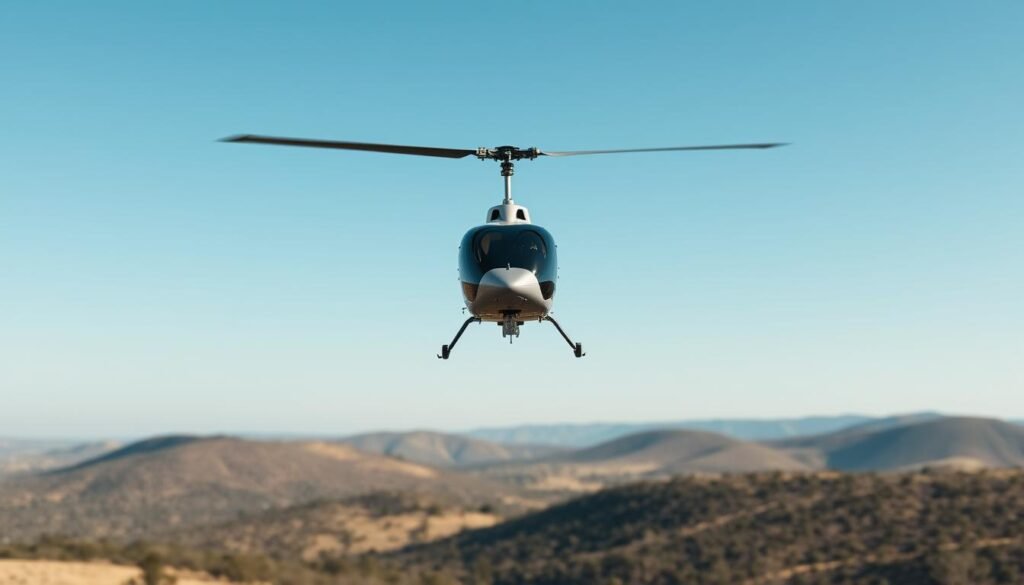
That capability lets this helicopter hover, fly slowly, and even move sideways or backward. Airplanes must keep forward speed to stay aloft, so fixed‑wing craft need paved strips and taxiways.
This article will compare rotary and fixed‑wing systems across control, procedures, safety, training, costs, missions, and comfort. You will see why VTOL capability reduces infrastructure needs and where each platform best fits real missions like offshore support, search and rescue, and executive transport.
Capabilities do not erase risk. Pilots still follow disciplined flight planning, coordinate with air traffic, and manage performance limits to keep operations safe in mixed‑use environments.
Key Takeaways
- Helicopters can take off and land without a runway thanks to rotor lift.
- VTOL ability reduces dependence on paved infrastructure.
- Fixed‑wing airplanes excel at speed and long‑range efficiency.
- Safety relies on planning, training, and airspace coordination.
- This article will detail missions, costs, and training to guide choice.
Do Helicopters Need a Runway: The Short Answer And Why It Matters
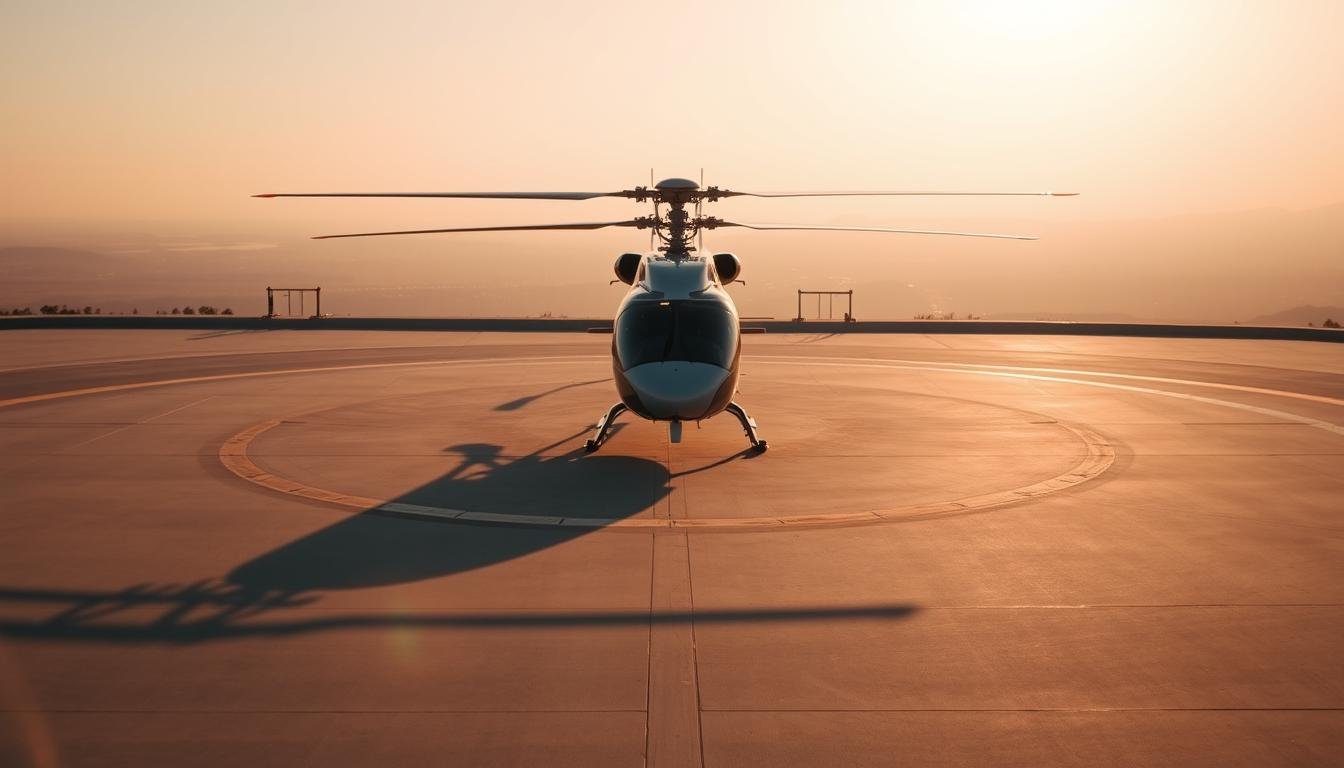
helicopters need no runway for routine operations; they lift off and land from helipads, rooftops, ships, or cleared ground. This freedom, unlike airplanes, lets crews reach tight sites for medevac, disaster response, and utility work.
Airplanes require runway distance because wings need steady airflow to develop lift. A helicopter’s rotor creates lift and gives the pilot control authority even at zero forward speed. That lets these machines hover, move sideways, and fly backward when mission profile demands precise placement.
Vertical capability changes mission outcomes: rapid point‑to‑point access and on‑scene hover reduce response time for time‑critical tasks like search and rescue.
Pilots use vertical lift and directional controls to climb, descend, and translate around air and ground obstacles without joining fixed‑wing traffic flows. Near airports they still coordinate with towered procedures to avoid interfering with runway operations.
- Infrastructure savings: communities can deploy distributed landing sites instead of long paved strips.
- Safety: crews assess wind direction, surface conditions, and obstacle clearance before any vertical operation.
This article will continue comparing principles, procedures, and training so decision‑makers understand when VTOL advantages outweigh runway convenience.
How Helicopters And Airplanes Generate Lift, Control Motion, And Use Speed
Lift for rotary and fixed-wing craft comes from very different engineering choices. Rotor blades act like rotating wings and can generate lift at zero forward speed. Fixed wings rely on airflow over the wing to make lift, so they need forward motion.

Rotor Blades Versus Wings: How Each Aircraft Generates Lift
Rotors spin to move air downward across the disk and create lift. The blades change pitch as they rotate, so the rotor both produces lift and directs thrust.
Wings make lift by moving the wing through the air. That is why airplanes require runways to accelerate and reach minimum airspeed.
Hover, Sideways, And Backward Flight: Helicopter Control Advantages
Collective and cyclic controls let the pilot change overall lift and tilt the rotor to produce directional motion. This gives precise hover, sideways translation, and controlled backward flight for confined-site access.
Minimum Airspeed And Forward Motion: Why Airplanes Require Runways
Fixed-wing stability improves with speed; an airplane can be trimmed and flown with light inputs once airborne. Rotors demand constant small inputs and active power management, especially near the ground and in high induced flow.
| Attribute | Rotorcraft | Fixed-Wing | Operational Impact |
|---|---|---|---|
| How Lift Is Made | Spinning blades create lift across a rotor disk | Airflow over wings during forward motion | Rotors allow vertical approaches; wings need runways |
| Control Method | Collective/cyclic and tail/gantry controls | Ailerons, elevator, rudder; trimmed at speed | Rotorcraft offer fine-position control; airplanes favor stability |
| Speed & Motion | Hover, slow, sideways, backward motion | Efficient at higher cruise speeds | Choice depends on mission range and maneuver needs |
| Power & Ground Effects | Power limits hover ceiling and out-of-ground-effect performance | Takeoff distance tied to wing loading and speed | Both share airfoil principles, but rotors change response |
For a concise list of interesting rotorcraft facts and mission uses, see top helicopter facts.
Takeoff And Landing Procedures Compared: VTOL Versus Runway Operations
Takeoff and landing routines differ sharply between vertical and runway operations. Procedure selection shapes traffic flow, radio calls, and surface use. Pilots must match technique to aircraft type, field status, and local traffic.

Towered Airports: Avoiding The Flow Of Fixed‑Wing Traffic
At controlled fields, controllers assign clearances that keep rotary traffic away from fixed‑wing traffic patterns.
- Routing: Helicopters often get pad, taxiway, or infield spots to minimize runway crossings.
- Sequencing: Clearance ensures separation from arriving and departing airplanes and reduces wake exposure.
- Communication: Concise position, altitude, and direction reports help integrate vertical flight into towered flows.
Non‑Towered Fields: Traffic Patterns, Altitudes, And Collision Avoidance
In non‑towered environments, pilots use disciplined pattern techniques to avoid conflict with others.
- Fly a tighter pattern near 500–700 feet AGL to keep clear of fixed‑wing traffic.
- Use offset or opposite‑side patterns, or cross midfield at 90° at a different altitude to avoid mixing flows.
- Announce intentions on CTAF, maintain scanning, and respect right‑of‑way rules to prevent collisions.
- Select pads or clear infield landing spots when possible to preserve the runway for airplanes.
Wind, obstacles, and air density change approach geometry and rotor inflow management. Pilots adjust controls and motion to maintain precise touchdown without depending on runway length.
For technical context on vertical operations, see vertical takeoff and landing aircraft.
Safety, Regulations, And Operating Envelopes In The United States
Safety in U.S. vertical and fixed‑wing operations depends more on systems and discipline than on vehicle type. Measured rates show that oversight and procedure matter.

Accident Rates, FAA Oversight, And Operating Rules
The U.S. Helicopter Safety Team’s fatal accident rate sits near 0.63 per 100,000 hours (five‑year moving average). That compares favorably to the broader general aviation rate of about 0.94. Commercial jetliners are far rarer in fatal events, roughly one death per 2.7 million flights.
FAA oversight drives many of those gains. Certification, mandated maintenance programs, and clear operational rules shape every pilot’s decision limits and the aircraft’s operating envelope.
- Regulation ties training, maintenance, and inspection to measurable safety outcomes.
- Recurrent training and logged hours build experience that helps pilots assess power margins, weather, and terrain risks.
- Charter and commercial standards usually demand higher compliance than private operations, improving assurance.
Discipline in procedure order — checklists, briefings, and standardized callouts — reduces human error across rotorcraft and fixed-wing aircraft. When helicopters or an airplane operate within performance limits, with competent pilots and good maintenance, flight safety is strong.
Bottom line: Safety is a system. Regulations, training, maintenance, and operational discipline work together to lower risk in U.S. aviation.
Training, Costs, And Career Paths: Helicopter Pilots Versus Airplane Pilots
Training costs and hours shape whether someone pursues rotary or fixed‑wing flight as a career. Budget, ratings, and instructor time determine how fast a student reaches employable experience. Read on for concrete figures and clear steps.

Flight Training Hours, Ratings, And Typical Expenses
Typical U.S. costs: Private pilot (helicopter) runs about $24,000–$30,000; private pilot (airplane) about $15,000–$20,000. Commercial helicopter training commonly exceeds $95,000 while airplane commercial training ranges $55,000–$100,000.
Minimum FAA hours: PPL for both types often cites 40 hours (about 30 dual, 10 solo). CPL minimums differ: about 150 hours for helicopter and roughly 250 hours for airplane pathways.
| Stage | Helicopter Typical | Airplane Typical |
|---|---|---|
| Private Pilot (PPL) | 40 hrs; $24k–$30k | 40 hrs; $15k–$20k |
| Commercial (CPL) | 150 hrs; $95k+ | 250 hrs; $55k–$100k |
| Instructor/Hour Building | CFI routes, tour or utility work; higher per‑hour costs | Flight instructor, regional pipelines; lower per‑hour cost |
Plan for FAA tests, medicals, and ratings (IFR, CFI/CFII, MEI) when budgeting. Expect actual hours to exceed minimums; instructor coaching is critical to reach safe proficiency.
- Path: PPL → instrument → commercial → CFI/CFII to build hours.
- Entry roles: flight instructor, tour pilot, utility support; growth leads to air ambulance, offshore, or law enforcement.
- Career contrast: fixed‑wing pilots often move to airlines/cargo; helicopter pilots follow mission‑driven tracks like SAR and external‑load ops.
For a detailed comparison of pilot tracks, see airplane vs helicopter pilot.
Use Cases, Noise, And Real‑World Missions: Choosing The Right Aircraft
Mission planners choose aircraft based on where and how crews must work on the ground. Match tasks to platform strengths and you save time, cost, and risk.

Short‑Range, Low‑Altitude Missions Where Helicopter Excel
Helicopter excel for on‑scene hover, confined landings, and external‑load lifts. Their ability to hold position over precise ground points makes them ideal for time‑critical response.
- Representative missions: air ambulance, search and rescue, utility line work, construction and heavy lift, offshore support, wildfire response.
- They can access rooftops, ship decks, and remote clearings with minimal setup.
Range, Speed, Fuel, And Comfort Considerations For Airplanes
Airplanes win for distance, cruise speed, and passenger comfort. Fixed‑wing craft carry more fuel and cover cross‑country legs with fewer stops.
| Factor | Helicopter | Airplane |
|---|---|---|
| Typical Mission | Short range, precise placement | Long range, efficient cruise |
| Fuel & Range | Higher burn per mile, frequent refuel | Lower burn per mile, greater endurance |
| Noise & Comfort | Noisier, more vibration | Smoother, quieter at cruise |
For pilots choosing platforms, weigh terrain, landing zone limits, time sensitivity, payload, and cost. Select the aircraft type that matches mission length and access needs to get the job done safely and on time.
Conclusion
When access and precision matter more than cruise speed, rotor systems win. Rotor blades can generate lift at zero airspeed, so a helicopter can hover, land in small zones, and perform precision approaches where runways are unavailable.
Airplanes remain superior for long legs: better speed, lower per‑mile fuel burn, and greater passenger comfort. For short missions, however, rotary machines give unmatched placement and control.
Pilots and instructors apply the same aerodynamic principles and disciplined training to manage motion, direction, and power within safe limits.
Match your mission, budget, and career goals to the platform. Learn required hours and training paths, then choose the aircraft that best supports your operational needs. For mission‑specific challenges in emergency flight ops, see challenges faced by helicopter pilots.
FAQ
Do helicopters require a runway to take off or land?
No. Rotary-wing aircraft lift from powered rotor blades and can perform vertical takeoffs and landings (VTOL). That allows operations from helipads, clearings, ships, or rooftops without a paved runway.
Why does the ability to hover matter operationally?
Hovering gives pilots access to confined sites, precise rescues, and urban missions where fixed-wing aircraft cannot operate. It reduces ground infrastructure needs and speeds response for medical, law enforcement, and utility work.
How do rotor blades generate lift compared to airplane wings?
Rotor blades act like rotating wings, creating lift by changing angle of attack as they move through air. Airplane wings rely on forward speed and a fixed wing profile to create lift, so they need a runway to accelerate.
Can rotary-wing aircraft fly backward or sideways?
Yes. Pilots use collective and cyclic controls to change rotor blade pitch and tilt the rotor disc, enabling hover, lateral, backward, and precise low-speed maneuvers that fixed-wing designs cannot perform safely.
Why do airplanes require minimum airspeed and a runway?
Fixed-wing lift depends on airflow over the wings. A runway provides the distance to reach takeoff speed and to decelerate on landing. Without forward speed, a fixed-wing aircraft will stall and lose lift.
How do takeoff and landing procedures differ between VTOL and runway operations?
VTOL procedures focus on vertical lift, clearance checks, and confined‑area hazards. Runway operations emphasize ground roll, rotation speed, climb gradient, and longer approach patterns. Each requires specific performance planning.
What must pilots consider when operating at towered airports?
At controlled fields, rotary‑wing pilots follow ATC instructions, avoid fixed‑wing traffic flows, and use designated arrival/departure routes. Coordination prevents wake turbulence encounters and maintains separation.
How do operations differ at non‑towered airfields?
Pilots use common traffic advisory frequency (CTAF), announce positions, and follow visual traffic pattern procedures. Helicopter pilots may use different pattern altitudes or confined‑area approaches to reduce conflict with fixed‑wing aircraft.
What safety oversight governs helicopter operations in the United States?
The Federal Aviation Administration (FAA) regulates certification, pilot licensing, airworthiness, and operating rules. Operators must meet FAA standards for maintenance, pilot currency, and specific mission approvals.
How do accident rates compare and what influences safety?
Accident rates vary by operation type; emergency services and offshore work carry higher risk due to environment. Training quality, maintenance, weather decision‑making, and pilot experience strongly influence safety outcomes.
What flight training hours and ratings are typical for rotorcraft pilots?
Private‑pilot helicopter training usually requires about 40–50 hours minimum, while commercial and instrument ratings need additional hours and maneuvers. Total costs rise with aircraft rental, instructor time, and exam fees.
How do training costs compare with fixed‑wing pathways?
Helicopter training typically costs more per hour because of higher hourly rates for rotorcraft and fuel. Commercial helicopter training often requires more investment for the same career progression compared with many airplane programs.
For which missions are helicopters the better choice?
Short‑range, low‑altitude missions like air ambulance, search and rescue, law enforcement, utility inspection, and offshore transport benefit from vertical lift, hover capability, and point-to-point access.
When is a fixed‑wing aircraft preferable?
Fixed‑wing planes excel at longer range, higher speed, fuel efficiency, and passenger comfort on sustained flights. For cross‑country travel, cargo hauling, and scheduled airline service, they remain superior.
How do noise and community impact factor into aircraft selection?
Rotor noise and blade-vortex interactions create distinct sound signatures that can affect communities more intensely at low altitude. Flight planning, operational timing, and route choice help mitigate local impact.practical, such as urban centers, emergency zones, or remote areas. While there are rare cases where a helicopter might use a runway for a running takeoff, this is the exception rather than the rule. The flexibility and accessibility of helicopters make them a valuable asset for both commercial and emergency use, debunking the myth that they need a runway.
Related Articles
- Can Anyone Learn to Fly a Helicopter? Understanding Training and Skills Required
- Why Do Helicopters Make That Distinctive Sound? Helicopter Noise Explained
- Do Helicopters Require More Maintenance Than Airplanes? Separating Fact from Fiction
- How Far Can Helicopters Travel? Dispelling Range Myths
- What Happens if a Helicopter Engine Fails? Debunking Catastrophe Myths
More from This Category
- Are Helicopters More Dangerous Than Planes? A Safety Comparison
- Do Helicopters Have Parachutes? Exploring Emergency Systems
- Can Helicopters Fly Upside Down? The Truth Behind Aerobatic Stunts
- Do Helicopters Need a Runway? Myth vs. Reality
- How Much Does It Really Cost to Fly a Helicopter? Busting the Myths
- How High Can Helicopters Fly? Debunking Altitude Myths
- Can Helicopters Fly in Bad Weather? Understanding Helicopter Capabilities
- Do Helicopters Really Hover Forever? Separating Fact from Fiction
- How Safe Are Helicopters? Debunking Common Misconceptions
- Top 10 Myths About Helicopter Safety: What You Need to Know