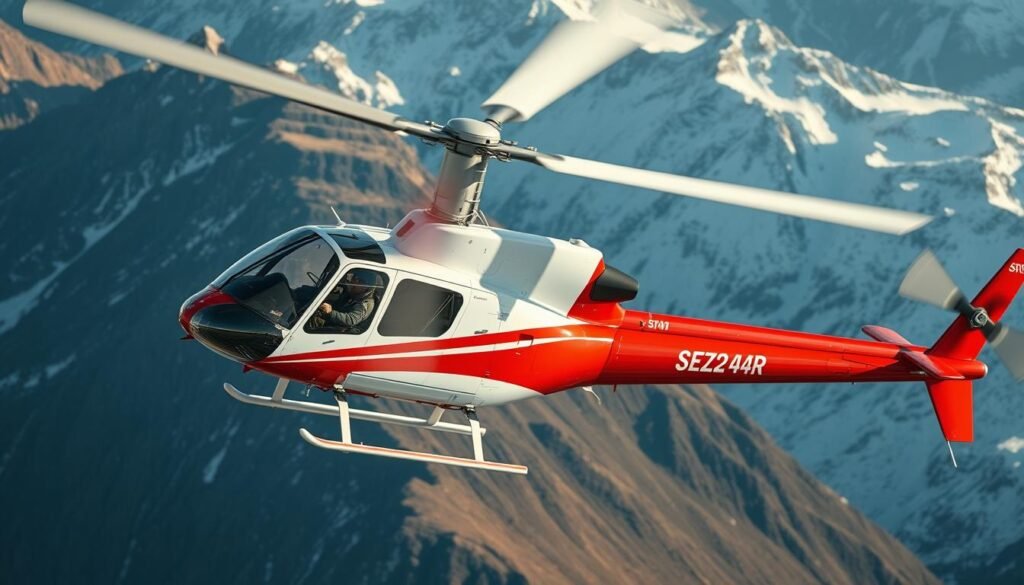
He watched the shoreline shrink as dusk closed in. A mayday call came over the radio. Within minutes, the crew switched from training mode to mission mode. They ran checklists, plotted a route, and lowered the winch into rough seas.
This short scene captures what this career demands: fast judgment, steady hands, and teamwork. The path covers ground school, flight instruction, and focused rescue training that builds operational readiness.
The field sits at the crossroads of public safety and aviation. Candidates may choose civilian or military routes. Each route trains a pilot for complex, high-stakes operations where safety and procedures guide every choice.
Readers will learn the core phases from initial training through mission-ready status, how credentials and hours open opportunities, and why this line of work rewards technical skill and calm decision-making.
Key Takeaways
- Training spans ground school, flight lessons, and specialized rescue scenarios.
- Civilian and military paths each prepare pilots for tough missions.
- Safety, checklists, and teamwork are central to reliable operations.
- Experience and credentials shape career growth and pay ranges.
- Learn more about selection and training routes at Canadian Forces pilot career.
Understanding The SAR Helicopter Pilot Career Path
A training flight can shift a student’s perspective on risk and responsibility.
This section maps a clear pathway from early exposure to full mission readiness. Aspiring pilots begin with basic rotorcraft familiarization and progress through staged training that builds cockpit skills and crew coordination.
Paths split into civilian and military pipelines. Both stress disciplined procedures, aircraft proficiency, and recurrent evaluations. The civilian route emphasizes certificate milestones and logged hours. The military route layers formal education and unit-level instruction.
- Initial exposure and ground lessons.
- First solo, ratings, and check rides.
- On-the-job learning, recurrent checks, and mission profiles.
- Senior mentorship, debriefs, and operational leadership.
Education complements hands-on work. Coursework and certifications speed progression. Mentors and instructors accelerate judgment, situational awareness, and technical competence.
| Phase | Focus | Key Milestone | Typical Time |
|---|---|---|---|
| Intro | Familiarization | First flight | Weeks–Months |
| Qualification | Training & Ratings | Check ride | Months–Year |
| Operational | Mission readiness | Unit checks | 1–3 years |
| Advanced | Leadership | Instructor/lead | 3+ years |
The journey yields steady growth in judgment and readiness for high-consequence missions. With accumulated time and experience, candidates reach reliable performance in search rescue operations.
Eligibility And Requirements For SAR Aviation
Medical clearance and academic records form the gatekeepers for any serious aviation candidacy.
FAA Medical Certificates And Baseline Qualifications
The civilian track relies on FAA medical classes that match operational roles. A second- or first-class medical is common for commercial duties. These exams check cardiovascular fitness, hearing, and visual acuity.
Meeting FAA requirements helps applicants prepare for mission-level demands and aligns civilian readiness with military baselines.
U.S. Air Force Pilot Candidate Standards And AFOQT
Applicants must pass the AFOQT and meet age and academic rules. Candidates must face a selection board before age 33. A recruiter makes the final eligibility determination.
Those seeking officer roles need verified education and test scores before board review.
Height, Vision, And Physical Conditioning Requirements
Height limits vary by aircraft; outliers may get special screening. Vision standards include normal color vision and near acuity of 20/30 uncorrected, with distance no worse than 20/70 correctable to 20/20.
No history of asthma, ongoing allergies after age 12, or disqualifying corrective eye surgery is preferred. Weight and conditioning follow Air Force fitness norms.
| Requirement | Civilian Standard | Air Force Standard |
|---|---|---|
| Medical Exam | FAA 1/2/3 Class | Military flight physical |
| Education | Relevant degree preferred | BA or BS within 365 days, GPA ≥ 2.5 |
| Vision | Correctable to 20/20 typical | Near 20/30; distance 20/70 correctable |
| Age | No strict cap | Selection board prior to 33 |
Note: Prior flight time strengthens a candidate’s profile and readiness for complex helicopter systems and mission work.
Civilian Training Path: Certificates, Flight Time, And Costs
Most civilian students start with a classroom and a headset before they climb into the cockpit.
Ground School, Written Knowledge Test, And Regulations
Ground school covers systems, regulations, emergency procedures, weather, charts, and navigation. Students study for the written knowledge test and review FAA rules. Classroom learning pairs with simulator practice and early dual flights.

FAA Flight Time Minimums For Private And Commercial
The FAA sets baseline hours: private requires 40 total hours and commercial needs 150 total hours. These minimums include specific dual and solo segments and cross-country time. Actual flight time often exceeds the minimum for safe skill mastery.
Training Costs, Ratings, And Budget Planning
Private costs typically range $15,000–$25,000. Commercial adds about $18,000–$35,000. CFI rating adds $4,000–$11,000. Prices vary depending on location, aircraft, and instructor choice. Instrument and combined programs can raise totals significantly.
Timelines: Months To Years From Student To Proficiency
Progress can take months or years. Frequent lessons and focused study shorten the span. Working with an experienced instructor and following a plan reduces wasted hours and expense.
| Certificate/Rating | Typical Cost | FAA Minimum Hours |
|---|---|---|
| Private | $15,000–$25,000 | 40 |
| Commercial | $18,000–$35,000 | 150 |
| CFI | $4,000–$11,000 | Varies |
| Instrument | $16,000–$17,500 | Adds IFR training |
For planning, read a practical guide on progression at training programs and certifications and budgeting tips at private-to-commercial cost breakdown.
Military Pathways To SAR Aviation
Applicants enter a sequence of testing, schooling, and hands-on flight training before earning wings.
Air Force Route: Degree, Age Limits, And Selection Boards
The Air Force route requires a BA/BS within 365 days and a GPA of at least 2.5. Candidates must earn qualifying AFOQT scores and pass medical and vision screens before a selection board reviews their file.
Candidates must meet the board age cutoff (prior to 33) and finalize eligibility with a recruiter. Height and cockpit-fit vary by aircraft; those outside average ranges may undergo special screening.
Prior flight time strengthens an application and helps during officer training, speeding adaptation in helicopter environments.

Navy Route: Recruiter Contact, Chat Hours, And Getting Connected
Prospective candidates can call 1-800-USA-NAVY or text NAVYBONUS to 764764 for immediate contact.
Live chat is available Mon–Fri 8:00am–10:00pm CST and Sat–Sun 10:00am–10:00pm CST (closed on federal holidays). Chat rules require minimum age, a username, and respectful conduct.
Service Commitments, Officer Training, And Wings Upon Completion
Both branches sequence academics, simulators, and aircraft phases. Commissioning sources differ, but completion leads to wings and operational assignments.
- Service commitment lengths depend on training funding and follow-on roles.
- Training pipelines emphasize safety discipline, leadership, and teamwork.
- Graduates deploy on missions that integrate multiple aircraft and ground elements.
How to Become a SAR Helicopter Pilot: Skills, Training, And Flight Time
A common path for accruing meaningful flight time is instructing others while polishing personal technique.

Building flight time as an instructor lets pilots earn income and log focused hours. As a certified flight instructor, one rehearses core maneuvers, emergency recoveries, and cross-country planning while guiding students.
Building Flight Time As A Certified Flight Instructor
Many pilots increase flight time by teaching pattern work, instrument procedures, and night operations. This role develops judgment and refines stick-and-collective skills.
Instruction also forces disciplined briefings, risk assessment, and structured debriefs that sharpen decision-making.
Rescue Operations Training And Mission Readiness
Mission training covers hoist coordination, confined-area approaches, power management, and crew resource management.
Communications with ground teams and precise task sequencing are practiced in live drills and scenario flights.
Navigation, Systems, And IFR Proficiency For Operations
Robust navigation and systems knowledge matters in low visibility, mountains, and maritime work. IFR proficiency reduces risk when weather closes in.
Pilots rehearse instrument approaches, avionics failures, and diversion planning during both simulator and flight sessions.
Training On Specific Aircraft And Equipment
Training specific aircraft includes hoists, night vision devices, and mission consoles. Standardization and checklist discipline keep operations consistent.
“Simulators let crews rehearse abnormal and emergency sequences safely, improving real-world responses.”
- Emergency procedure practice for high-gross-weight and density-altitude scenarios.
- Recurrent training, proficiency checks, and SOP reviews to maintain currency.
- Sim sessions that complement live flying for stress-tested decision-making.
Instruction, mentorship, and structured debriefs multiply learning and speed the move from training flights to operational readiness. For specialized courses and training pipelines that support search rescue operations, see role of helicopters in search rescue.
Career Outlook, Pay, And Operations In The United States
Earnings and duty cycles for rotarywing professionals vary widely by mission type and location.
Entry-level roles often start as flight instructors. Instructors average about $30,000 per year. Many move next into tour flying, where pay rises to roughly $40,000–$50,000.
Emergency services and EMS roles typically pay between $50,000 and $90,000, depending on hours and base needs. Firefighting assignments pay heavily during season; crews may average around $75,000 per fire season.

Salaries By Role: Instructor, Tours, Emergency Services, And More
Corporate, VIP, and offshore oilrig assignments can exceed $100,000. Demand for helicopter pilots is strong across public safety and industry sectors.
| Role | Typical Pay Range (Year) | Key Experience Drivers |
|---|---|---|
| Flight Instructor | $28,000–$35,000 | Flight hours, teaching record |
| Tour Pilot | $40,000–$50,000 | Customer service, low-altitude experience |
| Emergency Services / EMS | $50,000–$90,000 | Recent mission time, instrument currency |
| Firefighting (Seasonal) | ~$75,000 per season | Turbine time, type ratings |
| Corporate / Offshore | $100,000+ | Offshore experience, safety record |
Locations, Mission Types, And Operational Environments
Location alters opportunity and scheduling. Remote bases and offshore stations often add pay premiums or per-diem. Urban EMS centers pay steadily year-round.
Employers evaluate candidates by total hours, recent experience, turbine time, instrument proficiency, and prior mission exposure. Safety records and SOP adherence unlock higher roles.
- Demand drivers: seasonal firefighting, tourism cycles, and continuous EMS coverage.
- Typical duties: search rescue operations, EMS transport, utility work, and law enforcement support.
- Career path: instructor → tour/operator roles → EMS/utility/offshore as hours and checks accumulate year over year.
For detailed market salary data and trends, see the helicopter pilot salary guide. Networking and targeted applications increase opportunities and help match a pilot’s strengths with the right mission profile.
Applying Strategically: Education, Recruiters, And Next Steps
Candidates should build a clear plan that ties formal education and logged flight hours into a marketable package. This plan guides timing for assessments, officer training windows, and civilian hiring cycles.

Leveraging A Bachelor Degree And Prior Flight Time
Education matters. A bachelor degree or relevant degree helps meet Air Force rules and improves civilian prospects.
Recent flight time and clean logbooks must show safety, currency, and task proficiency. Highlight instrument work, turbine hours, and instruction time.
Coordinating With A Recruiter And Scheduling Assessments
Contact a recruiter early to verify medical and academic eligibility. Air Force candidates must pass the AFOQT, meet vision and medical screens, hold a BA/BS within 365 days, and pass a selection board before age 33.
Prospective Navy applicants may call 1-800-USA-NAVY or text NAVYBONUS to 764764. Live chat hours are Mon–Fri 8:00am–10:00pm CST and Sat–Sun 10:00am–10:00pm CST (closed on federal holidays).
- Align timelines by months to match class start dates and board schedules.
- Tailor resumes and logbooks to stress safety, recent currency, and mission-relevant skills.
- Pick location and mission sets that match strengths and career goals.
| Item | Action | Target |
|---|---|---|
| Degree | Verify transcripts and degree completion | Within 365 days for Air Force |
| Flight Time | Organize logbook highlights (IFR, turbine, instruction) | Recent currency shown |
| Recruiter | Schedule assessments and finalize eligibility | Contact early; align months ahead |
Proactive communication with mentors and disciplined weekly goals keeps momentum toward wings and service completion. Small, steady steps reduce administrative delays and strengthen applications.
Final Thoughts
Clear planning and steady training unlock the steps from student flights to mission wings.
Disciplined flight training and focused preparation guide candidates through medicals, academics, and assessments. Meeting those requirements matters for safe work in demanding aircraft and mixed environments.
Success rests on continuous learning, precise procedures, and professional judgment sharpened by practice and debriefs. Timelines may vary depending on training frequency, mentorship, and access to specific aircraft.
Teamwork with air and ground partners is essential during rescue operations; safety, clarity, and coordination remain the highest priorities.
Next steps: engage instructors, contact recruiters where applicable, and plan commitments through completion to earn wings and enter operations‑ready status. For guidance on transitioning flying skills, see transitioning from fixed‑wing.