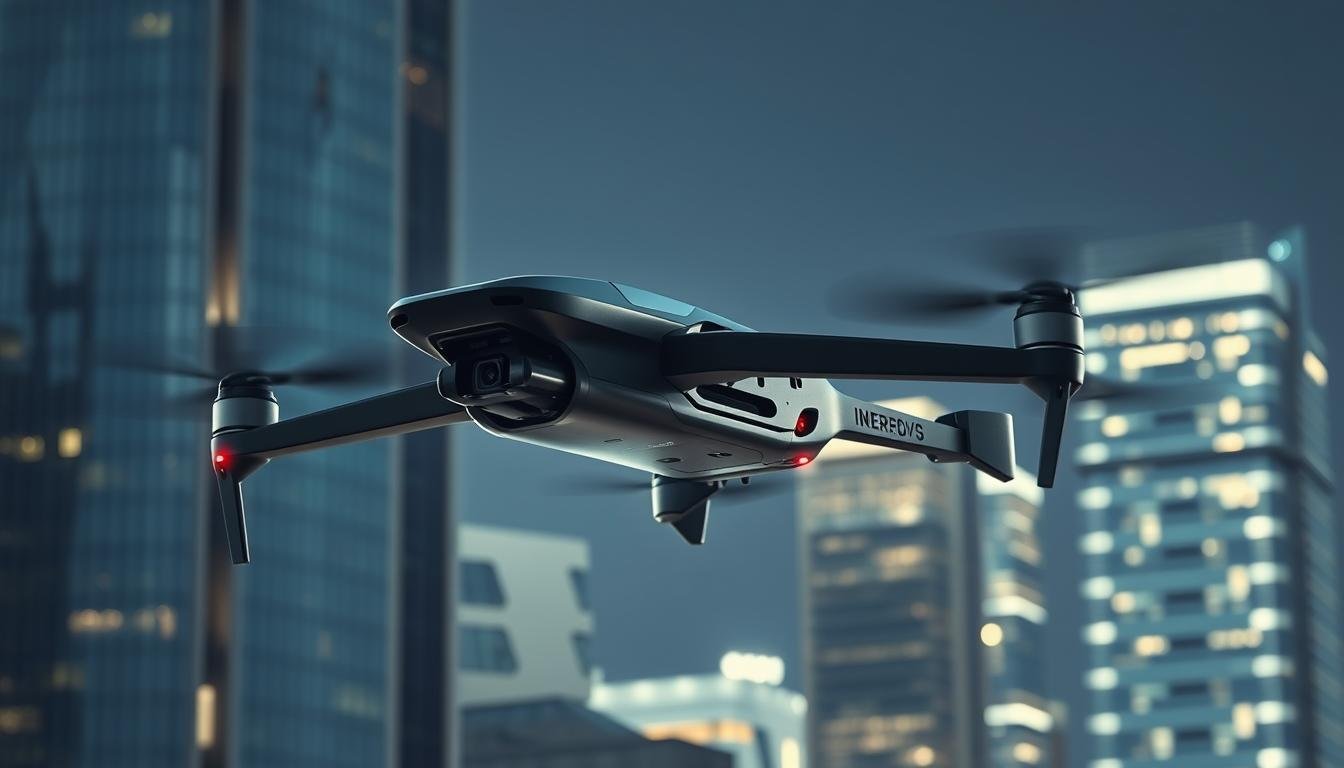
Drone Helicopter Technology now challenges old cost models: routine inspections that once ran $4,000–$30,000 per day can often be done for $1,000–$5,000 with unmanned systems.
The shift cuts mobilization and exposure while boosting data fidelity. Modern payloads like high-resolution cameras, thermal imagers, and LiDAR let teams inspect power lines, pipelines, and other critical infrastructure with far greater detail than before.
Platforms such as DJI’s Matrice 400 and Zenmuse L2 enable long flights and survey-grade mapping, while dock solutions like DJI Dock 3 automate scheduled patrols. Heavy-lift craft like the R550 add endurance and comms for wider-area missions.
Regulatory moves, including Canada’s 2025 BVLOS allowances, open new operational paths for routine beyond-visual-line-of-sight work. The result is a clear way forward that balances safety, efficiency, and proven performance honed over decades.
Key Takeaways
- Cost contrasts show clear savings for many inspection missions.
- Advanced sensors and payloads raise data quality for infrastructure surveys.
- Automation and dock-based flights reduce human exposure and downtime.
- Heavy-lift platforms expand range and mission capability for large sites.
- Regulatory progress is enabling routine BVLOS in practical settings.
- Operators must balance aircraft choice, risk, and mission needs for best results.
Drone Helicopter Technology
Enterprise systems have changed how utilities and contractors inspect assets across the United States. Modern platforms like the DJI Matrice 400 carry multiple payloads, stay aloft up to 59 minutes, and use wire awareness sensors to work close to power lines and pipelines.
What It Means Today In U.S. Aviation Operations
In U.S. operations, an unmanned aircraft often supplements or replaces a crewed flight for routine inspections. Teams capture high-resolution, thermal, and LiDAR data while keeping personnel safely on the ground.
Dock-based systems such as the DJI Dock 3 automate launch and recovery. That permits scheduled patrols without on-site staff and shifts operations toward remote supervision.
How It Compares To Conventional Helicopters In Real Missions
Drones can be dispatched faster for urgent checks, allowing more frequent monitoring over the years and better asset integrity tracking. They hover close and align sensors precisely, while a helicopter is limited by rotor wash, safety margins, and cost.
- Control and perception systems keep safe standoff in wire corridors.
- Crews build mixed fleets: drones for repetitive data capture; a helicopter for long legs or crewed tasks.
- Overall, unmanned platforms compress cost and risk for routine work, while helicopters retain an edge where endurance or personnel carriage is essential.
Cost And Efficiency: Drones Versus Helicopters
Many utilities and contractors now choose frequent, low-cost aerial checks over rare, expensive manned sorties. Day rates for a typical helicopter inspection run about $4,000–$30,000. Professional drones average roughly $1,000–$5,000 per day, and some Canadian programs report nearly 50% savings.

The efficiency gains let companies increase inspection cadence without large budget jumps. Automated launch systems like the DJI Dock 3 and platforms such as the Matrice 400 (up to 59 minutes, 6 kg payload) cut labor and turn‑around time.
- Lower daily costs free budget for more frequent checks and better asset health over the year.
- Repeatable flights reduce site time and let crews manage multiple assets remotely.
- Although a helicopter still offers single‑flight range advantages, routine flights collect targeted data faster and with less overhead.
| Metric | Helicopter | Drones | Impact |
|---|---|---|---|
| Cost Per Day | $4,000–$30,000 | $1,000–$5,000 | Lower recurring cost |
| Typical Endurance | Multiple hours | ~59 minutes (rotorcraft) | Battery swaps support continuous ops |
| Use Case | Long‑range transit, crewed tasks | Targeted infrastructure inspection | Higher inspection density |
For a deeper look at crewed rental economics, see helicopter rental costs.
Safety And Risk Management In Flight And On The Ground
Modern patrols prioritize keeping personnel on the ground while sensors and automated systems gather detailed line data. This change reduces direct exposure for the pilot and crew who once flew low over power corridors.
On-the-ground workflows now center on remote monitoring, mission planning, and data review. Teams dispatch missions from a safe control point, and dock-based systems let craft patrol routes after storms or on routine schedules.
Keeping Crew Off Power Lines And Pipelines
Traditional inspections placed pilots and flight crews in confined airspace near towers and wires, with documented incidents in such missions. Today, rotating LiDAR and mmWave radar add wire awareness and detection to the sensor suite, lowering collision risk.
- Reduced Exposure: Crew stays on the ground, avoiding tower climbs and close-range air operations.
- Sensing: Wire-aware sensors and geofenced paths cut the need for risky positioning maneuvers.
- Rapid Response: Docked systems allow fast post-storm checks without sending a full flight team into unsafe conditions.
- Focus Shift: Humans concentrate on analysis and remediation, not repetitive, hazardous flying.
The result is a measurable drop in worker risk while maintaining or improving data quality—a core goal for modern utility safety and asset management.
Data Quality And Sensors: LiDAR, Thermal, And Imaging Advances
High-resolution sensors now let teams build repeatable, engineering-grade models of power corridors in a single sortie.

Enterprise systems combine rotating LiDAR, thermal imaging, and high-res photogrammetry to produce 3D deliverables. With the Zenmuse L2, teams can map roughly 2.5 km² per flight at about 4 cm vertical accuracy, enabling true engineering analysis.
Close-In Precision On Power Infrastructure And Pipelines
Point clouds reveal vegetation encroachment, pole tilt, and structural deflection with fine detail. Thermal cameras detect hotspots and load anomalies that imagery alone can miss.
Enterprise Payloads: Rotating LiDAR, MmWave Radar, And 3D Mapping
Rotating LiDAR paired with mmWave radar improves wire detection and small obstacle sensing. This sensor stack raises the platform’s ability to maintain safe control in tight corridors.
Autonomous Corridor Mapping And Wire Awareness
AI-enabled payloads like GreenValley LiAir X4 perform 360° scanning and real-time obstacle avoidance while following a line automatically. Dock-based launch systems such as DJI Dock 3 standardize routes and data, lowering re-flight rates.
- Integrated Payloads: 3D point clouds, thermal layers, and high-res image capture in one sortie.
- Repeatability: Consistent routes allow change detection across flights for asset owners.
- Efficiency: Faster surveys, fewer retakes, and engineering-grade outputs for field teams.
For operators seeking purpose-built solutions for power corridors, see powerline inspection drones for examples of mission-focused systems and payload integration.
Range, Endurance, And Speed: Mission Duration And Miles Covered
Operators balance hover efficiency with cruise range when designing flights across miles of linear assets. The choice defines how long an aircraft stays on station and how quickly teams move between sites.

Comparing Hover Efficiency And Cruise Needs
Enterprise quadcopters advertise up to ~59 minutes of endurance, and heavy‑lift models list ~50 minutes with >50 mi nominal range and 14,000 ft MSL capability.
These figures support segmented missions: short hops with quick battery swaps yield dense, repeatable data where hover time matters most.
When Helicopter Range Still Closes The Gap
Light helicopters can cover 200–300 miles and stay aloft for hours, giving clear advantages when single‑sortie reach and transit speed are essential.
The practical gap narrows for far‑flung assets or long transits without ground support; planners use crewed aircraft for long legs and unmanned craft for concentrated inspections.
“Match platform strengths to mission objectives: endurance in place for detailed capture, range and speed for long single sorties.”
- Best Use: Hover platforms for dense data collection; helicopters for continuous range and speed.
- In complex terrain, modular planning concentrates hover time where it yields the most value.
Lift, Payload, And Heavy Equipment Operations
Modern heavy platforms close the gap between inspection flights and true worksite logistics. They pair high useful load figures with mission-focused flight systems to carry tanks, pumps, and other gear into the field.

From Inspection UAVs To Heavy Lift UAVs
Examples like the R550 Airtruck and R550 Sprayhawk list a max gross weight near 2,500 lb and a useful load up to 1,102 lb or 110 gal for spray work. Endurance runs about 50 minutes with a range beyond 50 miles when BVLOS approvals apply.
Useful Load, Payload Types, And Agricultural Missions
These platforms adapt rapidly: swap a mapping rig for a sprayer or a cargo rack. Full authority fly-by-wire, terrain LiDAR, radar altimeters, and redundant comms keep control stable as mass shifts.
- Operational lift: Supports cargo drops, seeding, and heavy spray equipment.
- Payload flexibility: LiDAR, thermal, and application tanks fit the same airframe.
- Redundancy: Dual LTE, LOS radio, and Starlink Mini protect command links.
“Heavy-lift platforms turn a single aircraft into a multi-role tool for farms, utilities, and logistics.”
For a closer look at these classes, see the heavy-lift drone overview.
Autonomy, Control Systems, And Operations At Scale
Operations grow sustainable when control and monitoring systems reduce human error and standardize missions. Fleet programs pair always-on stability augmentation with clear command modes to make routine inspections reliable at scale.

Full Authority Fly-By-Wire And Stability Augmentation
Full authority fly-by-wire with SAS reduces pilot workload and creates consistent handling across aircraft. Modes like ACVH and TRC translate pilot intent into smooth maneuvers, so teams focus on data capture rather than stick inputs.
System-level health monitoring flags faults early and supports predictable maintenance windows. That predictability helps operations schedule missions and maintain uptime.
Dock-Based Launch, Waypoints, And Emergency Return-To-Home
Dock-based systems enable pre-planned waypoint routes, automated launch and recovery, and timed patrols. This approach lets a remote pilot and visual observer supervise multiple sorties with role-specific staff available for special payloads.
Autonomy features include terrain avoidance, terrain following, and an emergency return-to-home that triggers on link loss or critical weather shifts. Layered communications and telemetry provide redundancy and support for distributed sites.
- Repeatability: Waypoint profiles produce consistent data across flights.
- Resilience: Automated RTH and obstacle sensing reduce mission failure rates.
- Scalability: Qualified pilots manage more missions safely when systems standardize handling.
| Feature | Benefit | Operational Impact |
|---|---|---|
| Full Authority Fly-By-Wire | Standardized handling | Lower pilot variation, easier scaling |
| Stability Augmentation (SAS) | Always-on stability | Reduced workload during complex sensor ops |
| Dock-Based Launch | Automated L/R and scheduling | Higher sortie cadence with remote supervision |
| Terrain Avoidance & RTH | Fail-safe navigation | Greater mission resilience in adverse conditions |
For complementary discussion on autonomy and crewed systems, see autonomous systems in crewed operations. These advances support the shift from pilot-centric sorties to fleet-based programs where uptime and data integrity drive value.
Regulatory Landscape: BVLOS And Commercial Approvals
Approval pathways shape how operators scale long-range inspections and manage risk. Rules now separate test flights from sustained service and set the boundaries for routine patrols.
U.S. Experimental Category And Operational Constraints
Many heavy-lift systems fly under the U.S. Experimental Category. That status enables development work but limits commercial revenue operations.
Companies balance test flights with contracted services while pursuing formal certification. For background on pilot rules, see the Part 108 overview.
Canada’s BVLOS Evolution And Cross-Border Lessons
Canada’s 2025 rules allow routine BVLOS for vehicles up to 150 kg in sparsely populated areas. This unlocks long right-of-way inspections with less waiver overhead.
- Approvals achieved around world, including Brazil, offer policy models to inform U.S. certification.
- Regulatory clarity dictates achievable range and staffing models for operators.
- Operators need documented detect-and-avoid, command-and-control, and contingency procedures to handle issues.
- Cross-border lessons stress standard training and maintenance support to keep fleets compliant and reliable.
- Helicopter operations still fill gaps where certification limits unmanned missions.
“Clear, evidence-based approvals turn experimental platforms into dependable service assets.”
Real-World Use Cases Around The World
Operators worldwide run scheduled patrols that pair rapid visual checks with mapped sensor data to prioritize repairs and reduce downtime.
These programs support routine inspections and fast response after storms, delivering actionable geospatial outputs to owners and crews.
Power Line Patrols, Post-Storm Damage, And Vegetation Management
Utilities deploy automated patrols along line corridors to scan for hotspots, broken hardware, and encroaching vegetation.
LiDAR and thermal layers let teams inspect live circuits without de‑energizing equipment. After storms, rapid sorties map damage, helping prioritize repairs and claims.
Pipeline Monitoring, Terrain Following, And Environmental Sensitivity
In steep or remote terrain, terrain-following systems produce high-resolution maps that spot erosion, encroachment, and potential leaks.
This approach reduces crew risk and lessens disturbances in wildlife-sensitive corridors compared with crewed air operations.
Agricultural Spraying, Seeding, And Utility Support Missions
Heavy agricultural platforms deliver large spray loads—up to 110 gallons on some models—with automated patterns and terrain-aware flight for even coverage.
Over the years, companies have shifted from ad-hoc sorties to standardized patrols that blend scheduled checks with on-demand inspections after severe weather.
- Faster Restoration: Post-storm mapping compresses repair timelines and documents conditions for regulators.
- Environmental Care: Reduced rotor wash and lower noise help protect sensitive habitats.
- Richer Data: Georeferenced outputs let infrastructure owners spot trends and plan targeted maintenance.
Closing The Gap: Technology Limits, Physics, And Future Designs
Scaling rotor arrays runs into hard physics that punish small disks and many motors. Actuator disk theory shows a single large rotor moves a large mass of air with less wasted energy. By contrast, many small rotors accelerate less air faster, which behaves more like a jet and wastes power.
Why Scaling Multicopters Faces Aerodynamic And Structural Issues
The practical reason multicopters struggle at scale is structural penalty. Distributed motors add booms, weight, and inertia that complicate control as prop diameters increase.
Ducted fans help some profiles but add mass and suffer lift loss in crossflow. Autorotation safety remains a distinct advantage of single-rotor aircraft; many multi‑rotor designs cannot replicate that energy buffer.
Coaxial Rotors, Stub Wings, And Hybrid Control Concepts
Future designs often borrow from decades of rotorcraft practice. Coaxial layouts recover tail-rotor losses and keep a compact footprint.
Stub wings offload rotor lift at speed, improving range and cruise efficiency. Hybrid concepts pair a large central rotor for lift with small control rotors and advanced fly-by-wire control to balance lift, speed, and maneuvering need.
“Images of future craft tend to resemble evolved rotorcraft rather than dense clusters of rotors.”
- Physics explains the gap: one large disk is more efficient than many small ones.
- Machine design reason: distributed systems add weight and inertia penalties.
- Future need: combine proven lift systems with modern control for better speed and endurance.
Conclusion
Fleet programs now pair routine patrols with targeted sorties to deliver repeatable, high‑quality outputs that help owners prioritize repairs and reduce downtime.
For many line and pipeline tasks, drones outperform helicopters on cost, cadence, and data breadth, turning checks into an efficient order of operations.
The sensor stack, autonomy, and control system maturity support scalable flight workflows while preserving aviation discipline and safety for crew and pilot teams on the ground.
Mixed fleets remain the pragmatic way forward: use rotorcraft for long range, speed, or cargo lift and use unmanned systems for routine inspections and dense data capture.
Program leaders should match equipment and payload to mission goals, track regulatory changes year by year, and institutionalize procedures that last for years and decades.
FAQ
What does drone helicopter technology mean today in U.S. aviation operations?
It refers to the integration of unmanned rotorcraft into commercial and public-service missions, including powerline inspection, search and rescue, and infrastructure surveillance. Operators such as Lockheed Martin, Boeing, and Northrop Grumman work with startups and utilities to add sensors, autonomy, and safety systems that let crews perform tasks faster and with less human exposure to hazards.
How does this compare to conventional helicopters in real missions?
Small electric multirotors excel at close-in inspection and low-risk surveillance, offering lower operating costs and precise hovering. Manned aircraft still lead in range, payload for heavy lift, and complex crewed missions. In many operations, companies combine both to balance endurance, speed, and data collection needs.
Are unmanned systems more cost-efficient than crewed aircraft?
For routine inspections and short-range tasks, they deliver significant savings in fuel, crew, and maintenance. However, initial procurement, sensor suites like LiDAR and thermal cameras, and regulatory programs such as FAA waivers influence total cost. The breakeven depends on mission tempo and payload needs.
What safety measures manage risks in flight and on the ground?
Operators implement detect-and-avoid, geofencing, redundant control links, and trained remote pilots. Ground safety plans include exclusion zones, launch-and-recovery protocols, and coordination with air traffic control. These controls aim to reduce collisions, wire strikes, and ground injuries.
How do teams keep crews off power lines and pipelines during inspections?
Remote vehicles equipped with high-resolution imaging and LiDAR allow technicians to stand clear of energized infrastructure. Utility companies use preprogrammed flight lines and real-time telemetry to maintain safe standoff distances while capturing detailed condition data.
What sensor advances improve data quality for infrastructure surveys?
Rotating LiDAR, high-resolution RGB and multispectral cameras, thermal imaging, and mmWave radar improve detection of corrosion, hotspots, and vegetation encroachment. Improved onboard processing and edge AI let systems filter noise and deliver actionable reports faster.
How is precision achieved close to power infrastructure and pipelines?
Precision comes from tight GPS/RTK integration, optical flow sensors, and LiDAR-based SLAM (simultaneous localization and mapping). These combine to maintain stable hover and centimeter-level positioning near wires and towers.
What enterprise payloads are common for mapping and inspection?
Typical payloads include rotating LiDAR units, mmWave radar for through-vegetation sensing, multispectral cameras for vegetation health, and 3D mapping kits. Payload modularity helps teams swap sensors without redesigning the airframe.
Can systems perform autonomous corridor mapping and wire awareness?
Yes. Autonomous corridor mapping uses preplanned waypoints, terrain-following algorithms, and wire-detection models to trace linear assets. Wire-awareness systems use LiDAR and vision to detect and avoid conductors during automated missions.
How do range, endurance, and speed compare across platforms?
Electric multirotors typically offer short endurance but high maneuverability. Hybrid and turbine-powered rotorcraft provide greater range and cruise speed. Mission requirements—hover time, miles covered, and payload—determine the optimal choice.
When does helicopter range still close the gap?
For long-haul patrols, heavy-lift cargo, or missions requiring extended loiter time, crewed rotorcraft remain superior. Advances in hybrid propulsion and fuel-efficient designs narrow this gap but physics and energy density still limit battery-only systems.
How do lift and payload capabilities scale from inspection platforms to heavy-lift UAVs?
Small platforms carry sensors and light payloads for inspections. Heavy-lift unmanned systems and helicopters carry slung loads, construction materials, or large sensor arrays. Structural design, rotor sizing, and powerplants determine practical useful load.
What payloads support agricultural missions and utility support?
Spreaders, spray booms, seeding systems, multispectral scanners, and precision applicators enable spraying, seeding, and crop health analysis. For utilities, payloads include hot-spot thermal cameras, corona cameras, and ruggedized data links.
What autonomy and control systems enable operations at scale?
Large fleets rely on command-and-control platforms, automated mission planning, full-authority fly-by-wire systems, and stability augmentation. These systems let operators manage many assets, reduce pilot workload, and maintain consistent inspection coverage.
How do dock-based launch, waypoints, and emergency return-to-home work?
Dock-based systems automate charging and deployment from fixed sites. Preprogrammed waypoints guide missions, and layered fail-safes trigger safe-return behavior on link loss, low power, or sensor failure. Redundant navigation and secure communications support reliability.
What regulatory landscape governs BVLOS and commercial approvals?
In the U.S., the FAA issues waivers and operational authorizations for BVLOS flights under specific conditions and safety cases. Operators must demonstrate detect-and-avoid, communications resilience, and risk mitigation for approvals.
What is the U.S. experimental category and its constraints?
The experimental category permits testing and development flights but restricts commercial operations and requires detailed safety oversight. It allows manufacturers and universities to validate systems before seeking full certification.
How has Canada evolved BVLOS rules and what lessons apply cross-border?
Canada has progressed with advanced BVLOS approvals, leveraging partnerships with Transport Canada and industry pilots. Lessons include robust community engagement, standardized safety cases, and harmonized technical requirements that ease cross-border operations.
What real-world missions demonstrate value around the world?
Examples include power line patrols after storms, post-event damage assessment, vegetation management, pipeline monitoring with terrain following, and precision agricultural spraying. Utilities and emergency agencies use these systems to reduce response time and crew exposure.
How do systems handle terrain following and environmental sensitivity for pipeline monitoring?
Terrain-following combines lidar, radar altimeters, and digital elevation models to maintain consistent standoff heights. Environmental sensitivity is managed by low-noise electric systems, careful flight planning, and minimal ecological disturbance protocols.
Why does scaling multicopters face aerodynamic and structural issues?
Larger rotors and heavier airframes encounter increased blade loading, vibration, and control complexity. Structural weight rises nonlinearly, making power and materials engineering crucial to avoid diminishing returns as size grows.
What design concepts help close capability gaps, like coaxial rotors or stub wings?
Coaxial rotors increase lift in compact frames; stub wings offload cruise lift to improve efficiency; hybrid-electric and tiltrotor concepts blend vertical lift with airplane-like range. Combined approaches seek to balance hover performance, speed, and payload.