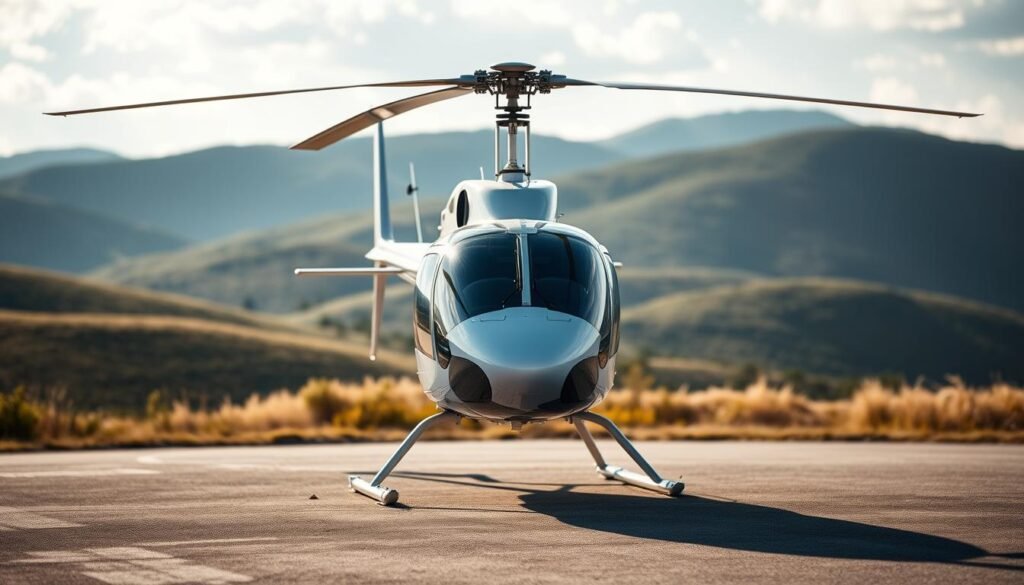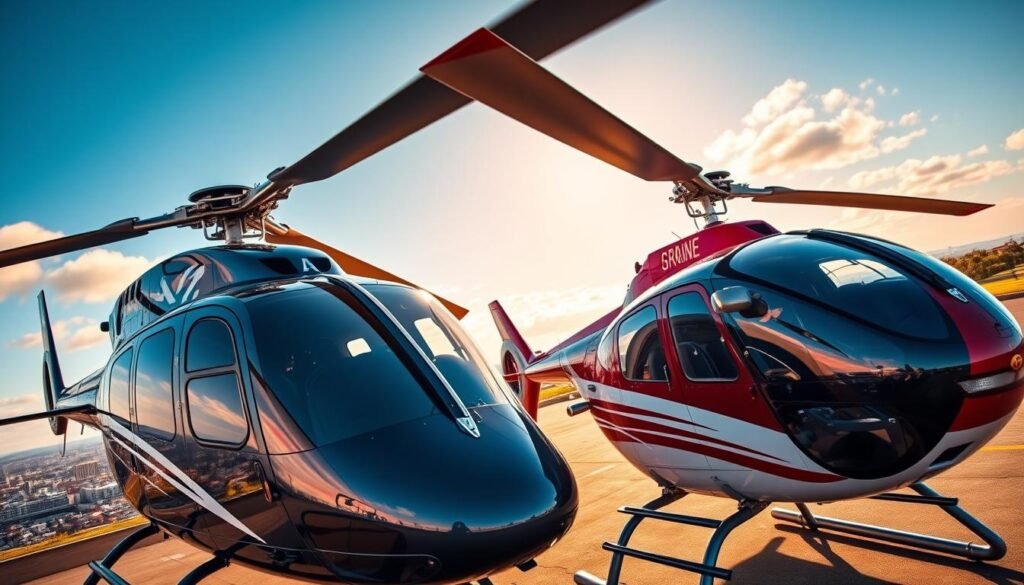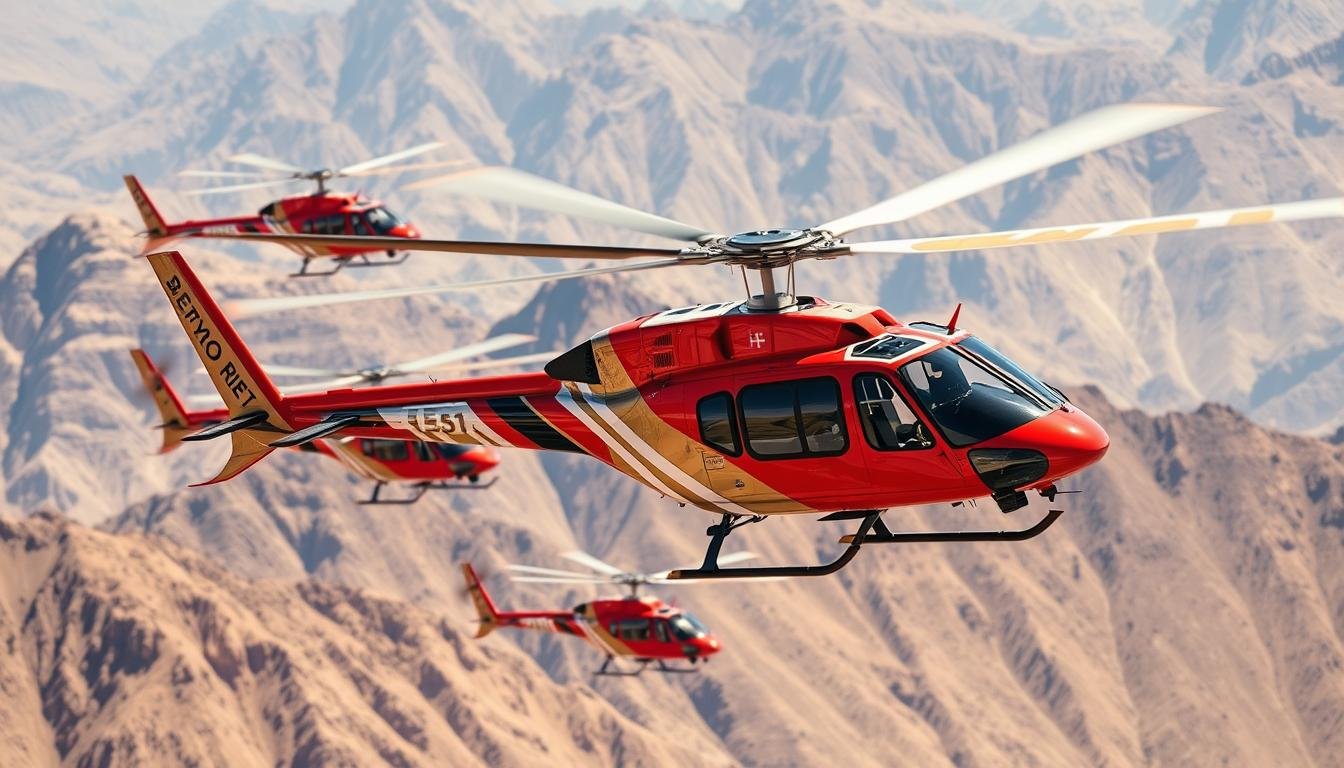
One study found that rapid aerial response can reduce fatality rates by up to 40% in remote incidents. That scale of impact is exactly why professional teams invest in specialized search and rescue helicopters—aircraft built for speed, precision, and life-saving capability when every second counts.

This guide catalogs leading models by capability, mission fit, and real-world use. It profiles Bell, Airbus, Sikorsky, and AgustaWestland lineups used across mountain, maritime, and urban operations.
Readers will learn how airframe performance, avionics, and modular cabins match specific tasks. The text stresses lifesaving tech like hoists, thermal imaging, night vision, and collision avoidance.
Practical value: readers get a simple framework to align range, payload, and crew needs with budgets and joint service protocols. The piece also highlights training, precision hover skills, and decision making under pressure as key factors for mission success.
Key Takeaways
- One phrase defines the focus: search and rescue helicopters serve varied emergency roles.
- Choice depends on environment: sea, mountain, city, or disaster zones.
- Core systems — hoists, sensors, and avionics — drive safety and reliability.
- Modular cabins let a single aircraft switch roles fast.
- Range, payload, and crew planning must match mission profiles and budgets.
- Interagency coordination and training matter as much as hardware.
What Are Search And Rescue Helicopters?
Airborne rescue platforms are purpose-built to locate survivors, provide on-scene care, and move them to safety. These aircraft operate across mountain, maritime, and urban missions. They pair sensors with medical systems to shorten response time.
Core SAR Roles Across Land, Sea, And Urban Areas
Core roles include mountain extraction, air-sea hoist operations, urban structural response, and coordinated ground integration. Typical mission phases run from alert and planning to launch, locate, stabilize, hoist or land, transfer of care, and debrief.
How U.S. Agencies Define And Coordinate SAR
The U.S. Coast Guard defines SAR as using available resources to assist persons or property in potential or actual distress. The Department of Defense separates the act of locating from the act of retrieving; Rescue Coordination Centers coordinate searches while teams perform rescues.
- RCCs, Coast Guard sectors, and Air Force units align communications, asset tasking, and incident command.
- Onboard capabilities often include hoists, litters, rescue baskets, medical kits, NVG, thermal sensors, loudhailers, and advanced navigation.
- Urban search and urban search rescue integrations rely on interoperable radios, common procedures, and preplanned landing zones.
Standard operating procedures and mutual-aid agreements speed multi-agency activation and improve outcomes. For further context, readers can consult a detailed overview at search and rescue.
The Role Of Helicopters In Modern Rescue Operations
Modern rotor platforms combine speed, precision hover, and lifting power to close lifesaving gaps in remote incidents.
Rapid Response, Precision Hover, And Hoist Capability
Helicopters uniquely match time-critical needs. They launch fast, fly direct, and reach scenes that ground vehicles cannot. Vertical lift plus precision hover enables access to rooftops, cliffs, and vessels where landing is unsafe.
Hoists and winches let crews extract patients from tight spots. Stabilized hovers and reference systems reduce risk near obstacles and powerlines during urban or maritime approaches.
Night vision and thermal imaging extend operating windows. These sensors keep teams mission-capable in low light and poor visibility while collision-avoidance systems improve overall safety.
“Speed without control is dangerous; the right hover systems make rapid response effective.”
Modular cabins switch from EMS stretchers to law enforcement kits or cargo in minutes. Crew coordination — pilots, hoist operators, and medics — keeps margins safe on high-workload approaches.
Typical timelines vary by base readiness: some units launch within minutes, others take longer based on staffing and position. Integrated operations with boats, ground squads, and fixed-wing assets deliver the best outcomes.
Mission Environments And Their Unique Aircraft Demands
Different mission environments force teams to match aircraft traits to the task rather than retrofit one model to every job.
Mountain, Maritime, Urban, And Combat Conditions
Mountain missions demand high power margins and rotor efficiency for thin air. The AS350 B3 is notable for its hot-and-high pedigree and strong climb rates.
At sea, aircraft need flotation gear, anti-corrosion treatments, and hoists that survive rolling decks. Overwater navigation and maritime hardening reduce long-term wear.
In cities, compact footprints, superior visibility, autotrim systems, and four-axis autopilots ease tight LZ work. The EC135 shows how agility and avionics improve urban safety.
Combat search and combat search rescue roles add armor, countermeasures, redundant systems, and heavy external lift. The UH-60 emphasizes survivability for tactical extractions.
Weather, Night, And Terrain Constraints
Weather hazards such as icing, strong winds, and sea spray require de-icing systems and maritime hardening to preserve safety and mission readiness.
Night operations depend on NVG-compatible cockpits and IR sensors that keep crews effective in low light. These sensors lower risk during limited-visibility flights.
Terrain hazards include rotor wash in loose scree or snow and wire-strike near infrastructure. Obstacle databases, wire cutters, and rehearsed SOPs help protect personnel and aircraft.
- Crew readiness: environment-specific checklists and regular rehearsals cut errors on high-workload approaches.
- Equipment checks: mission-fit loads, corrosion inspections, and function tests reduce in-flight surprises.
| Environment | Key Aircraft Trait | Example Model | Primary Mitigation |
|---|---|---|---|
| Mountain | High power margin; rotor efficiency | AS350 B3 | Hot-and-high tuning; weight management |
| Maritime | Flotation; corrosion resistance | AW139 (maritime-fit) | Anti-corrosion coatings; flotation packs |
| Urban | Compact agility; advanced avionics | EC135 | Four-axis autopilot; enhanced visibility |
| Combat | Survivability; external lift | UH-60 | Armor; countermeasures; redundant systems |
For operational doctrine and detailed platform guidance, consult the Helicopters in SAR Overview.
Top Models Used In Rescue Missions
Professional units rely on a handful of manufacturers whose models set the standard for rapid, repeatable response. This section groups the leading OEMs and explains why their platforms dominate service fleets.

Bell, Airbus, Sikorsky, And AgustaWestland Lineups
Bell, Airbus, Sikorsky, Eurocopter/EC, and AgustaWestland supply widely used types: Bell 206-B3, Bell 407HP, Bell 429, AS350 B3, Sikorsky S-76, EC135, AW139, and the UH-60 Black Hawk.
- Why these OEMs lead: reliability, global parts networks, and strong training ecosystems keep units mission-ready.
- Selection drivers: range, endurance, cabin capacity, and external-load capability match specific mission sets.
- Avionics & safety: NVG compatibility, synthetic vision, and terrain awareness systems reduce risk in complex operations.
- Use cases: air ambulance, maritime missions, mountain lifts, law enforcement support, and heavy-lift tasks.
- Compliance: modular mission kits and certification rules shape U.S. EMS, public, and military deployments.
For a model overview and buyer context, visit a detailed guide on types of rescue helicopters or an industry brand roundup at top helicopter brands. Subsequent sections dive into each airframe’s specs and best-fit roles.
Bell 407HP: Speed, Maneuverability, And All-Weather Response
The Bell 407HP pairs high cruise speed with nimble handling for time-critical urban missions. It blends utility performance with predictable maintenance cycles, making it a strong option for public safety teams and medical operators.
Key Specs And Cabin Configuration
Passenger Capacity: 6. The cabin adapts quickly for EMS stretchers, medical kits, or mission equipment while keeping ingress and egress efficient.
Max External Load: 2,500 lbs supports short-haul lifts and hoist setups for on-scene extraction.
Max Speed / Range: 161 mph top speed with a 250-mile range, suited to regional hospital links and interfacility moves.
Best-Fit Missions: Rapid Medevac And Urban Support
The 407HP’s acceleration and stable hover near obstacles enable fast urban launches and time-sensitive medevac operations.
Avionics include NVG compatibility and robust navigation for all-weather approaches, which lowers crew workload and improves safety.
- Roles: rapid medevac, urban support, patrol/observation, light maritime overflight with kits.
- Performance: strong hover margins let teams conduct hoist operations with confidence.
- Economics: reliable systems and predictable maintenance cycles help agencies maintain high availability.
| Attribute | Value | Operational Benefit | Best Use |
|---|---|---|---|
| Passenger Capacity | 6 | Flexible cabin layouts for patient care | Urban medevac, interfacility transfer |
| Max External Load | 2,500 lbs | Supports hoists and short-haul lift tasks | On-scene extraction, cargo lift |
| Max Speed / Range | 161 mph / 250 mi | Fast regional response; extended reach | Hospital networks, regional missions |
| Avionics | NVG-compatible, all-weather nav | Reduced pilot workload; safer approaches | Night ops, low-visibility missions |
Agencies moving crews from light single types should plan transition training focused on higher-speed handling and utility mission procedures. For operational context on how rotor assets changed emergency response, see this overview on how helicopters revolutionized emergency operations.
Bell 206-B3: Proven Reliability And Low Operating Costs
Lightweight and highly dependable, the Bell 206-B3 has served as a workhorse for many public service units. Its simple systems and strong safety record make it a cost‑effective choice for routine patrols and basic emergency roles.

Key Specs And Performance Envelope
The 206-B3 carries four passengers in a compact cabin. Top speed reaches 139 mph and the practical range is about 300 miles.
That range lets teams cover extended search sectors and loiter economically when demand is low. The cabin adapts for a compact medical kit, observer seats, or comms racks.
- Role value: ideal for training, light patrol, and basic EMS support with dependable systems.
- Logistics: strong parts availability and simple maintenance support high readiness.
- Limitations: lower lift than twin‑engine types, so heavy external work is not recommended.
- Training path: the model serves as a stepping stone to larger rescue platforms while keeping flight hours affordable.
“A reliable platform with low direct costs lets operators fly more often and stay mission‑ready.”
Bell 429: Versatility And Advanced Avionics For Diverse Missions
The Bell 429 blends twin-engine confidence with a spacious cabin and modern avionics to support demanding public-service roles.
Its design emphasizes safety, mission flexibility, and crew efficiency. The 429 offers seven-passenger capacity, a 390-mile range, a 150 mph top speed, and a 2,000-lb external load. These traits make it suitable for air ambulance runs, maritime patrols, and joint law enforcement operations.
Key Specs And Safety Features
Twin-engine reliability and advanced automation reduce pilot workload during high-stress approaches. Options like modern FMS, TAWS/HTAWS, and NVG-compatible cockpits mitigate controlled-flight-into-terrain risks.
Mission Fit: Air Ambulance And Law Enforcement Support
The cabin accommodates dual-stretcher EMS layouts and racks for medical or tactical equipment. A 2,000-lb sling capacity and 390-mile range extend regional coverage and allow longer on-scene loiter times.
- Interoperable comms and digital mapping ease joint operations with ground units.
- Maintainability and training pipelines lower downtime and speed crew proficiency.
- Compared to single-engine light utility types, the 429 adds redundancy, cabin volume, and extended range for mixed-terrain missions.
| Attribute | Value | Operational Benefit |
|---|---|---|
| Passenger Capacity | 7 | Dual-stretcher EMS and crew flexibility |
| Max External Load | 2,000 lbs | Sling support for cargo and long-range extractions |
| Range / Speed | 390 mi / 150 mph | Regional reach for interfacility transfers |
| Safety Systems | FMS, TAWS/HTAWS, NVG | Reduced CFIT risk; safer night ops |
For a side-by-side comparison of medium twin options used by EMS crews, see the AW139 vs Bell 412 comparison.
Airbus AS350 B3: High-Altitude Power For Mountain Rescue
Alpine work demands tight handling, strong hover margins, and clear cockpit sightlines—areas where the AS350 B3 excels.

Key Specs And Hot-And-High Capability
Passenger Capacity: 5. The AS350 B3 pairs a compact footprint with exceptional visibility for confined-area approaches.
Performance: A 2,500-lb max external load and robust hover performance suit winch operations on steep terrain. Top speed reaches 160 mph with a 345-mile range, balancing sector coverage with rapid time-to-scene.
Avionics include terrain-awareness tools and NVG compatibility that improve situational awareness in narrow canyons. Mission kits adapt the cabin for litters, technical rope systems, and cliffside stretcher work.
Pilot Skills: Teams must master mountain meteorology and density-altitude planning to use the airframe safely. Compared with heavier twins, the AS350 B3 trades raw payload for lower cost, superior agility, and easier access to tight landing zones.
“Power margins at altitude, not just horsepower, define safe alpine operations.”
Sikorsky S-76: Range, Cabin Volume, And Heavy External Loads
The Sikorsky S-76 pairs long legs with a roomy cabin to support large-scale response work. It serves agencies that need to move multiple patients, teams, and gear in one sortie. The platform’s balance of speed and payload suits complex air operations across wide areas.
Key Specs And Disaster Relief Applications
Key figures: passenger capacity 12; max external load 5,000 lbs; max speed 178 mph; range 472 miles. These specs let crews stage extended missions without frequent refuel stops.
- Cabin Volume: room for multiple medics, patients, or responders plus substantial gear.
- External Load: a 5,000-lb sling capacity for bulk supplies, field equipment, or temporary shelters.
- Range & Speed: 472-mile range and 178 mph cruise expand operational radius and compress critical timelines.
- Roles: mass patient moves, logistics runs, aerial assessment with high-res sensors during disaster relief.
- Safety & Support: advanced avionics, autopilots, NVG compatibility, plus maintainability that sustains high-tempo use.
Training: crews train for multi-crew coordination and long sorties with variable loading. For an overview of different types, see a practical guide on different types of helicopters.
Eurocopter EC135: Compact Agility For Urban Search And Rescue
In dense urban settings, aircraft that blend compact size with precise handling make rooftop pickups and hospital transfers routine.
Key Specs, Avionics, And EMS Configuration
Key figures: passenger capacity 7; max external load 1,455 lbs; max speed 158 mph; range 395 miles. These numbers give the EC135 long legs for regional air links while keeping time on task high.
Compact footprint and fenestron‑tail variants aid maneuvering near buildings and hospital pads. The shrouded tail reduces rotor wash and improves safety around rooftops.
Cabin layouts support dual‑stretcher EMS fits, built‑in life support, and ergonomic workflows that speed patient care. Avionics include obstacle awareness, stabilized approach modes, and NVG compatibility for low‑light city operations.
- Dual‑use roles: law enforcement observation, mapping, and pursuit coordination complement medical missions.
- Training: crews practice precision hover in confined areas and tight comms with ground units.
- Reliability: high sortie rates in dense airspace rely on robust maintenance cycles and proven systems.
“Agility in tight LZs often beats raw payload when access is the primary mission constraint.”
For advances that improve urban operations, see developments in rotorcraft systems at helicopter technology advancements.
AgustaWestland AW139: Long Range And Multi-Mission Flexibility
Designed for endurance and flexibility, the AW139 extends operational reach for complex incidents. Its blend of speed, range, and cabin volume makes it a top choice for offshore EMS, remote-area response, and large-scale evacuations.
Key Specs, Safety Suite, And Remote Area Response
Core figures: passenger capacity 15; max external load 2,866 lbs; max speed 193 mph; range 675 miles.
The 675-mile range and 193 mph cruise let teams reach distant offshore sites and remote inland incidents without intermediate refuel stops.
- The roomy cabin converts to multi-stretcher EMS, SAR kits, or command/communications fits for extended operations.
- Advanced safety suites and a four-axis autopilot enhance stability in degraded visual environments and reduce pilot workload.
- External sling capacity supports heavy logistics during disaster relief and sustained supply runs.
- Maritime kits add corrosion resistance and overwater nav to make the airframe sea‑worthy for offshore missions.
- Strong lifecycle support, training pipelines, and parts networks keep availability high for public and private agencies.
“Long range, roomy cabins, and proven safety systems make the AW139 a flexible platform for demanding missions.”
| Attribute | Value | Operational Benefit | Best Role |
|---|---|---|---|
| Passenger Capacity | 15 | Multiple-stretcher or command setups | Mass evacuation, offshore EMS |
| Range / Speed | 675 mi / 193 mph | Extended reach for remote incidents | Long-distance response |
| Max External Load | 2,866 lbs | Heavy sling for logistics | Disaster relief support |
Sikorsky UH-60 Black Hawk: Combat Search And Rescue Backbone
Designed for robust battlefield duty, the Black Hawk pairs survivability with large lift capability.
Key Specs, External Lift, And Survivability
The UH-60 carries 11 personnel and can sling up to 9,000 lbs. Top speed reaches 183 mph with a range near 368 miles. These figures support rapid insertion and long-reach extraction on demanding timelines.
CSAR And Military Support Roles
Armor, defensive countermeasures, and redundant systems give crews margin in hostile airspace. The platform’s cabin adapts for medevac, special-operations kits, or heavy logistics loads.
Interoperability with the U.S. Air Force and joint units makes it a core asset for coordinated operations. Crews train for formation flight, low-level ingress, and NVG work in complex environments.

| Attribute | Value | Operational Benefit |
|---|---|---|
| Passenger Capacity | 11 | Team transport or multi‑casualty medevac |
| Max External Load | 9,000 lbs | Tactical resupply, vehicle movement, complex extractions |
| Speed / Range | 183 mph / 368 mi | Rapid insertion/extraction across theater |
| Survivability | Armor, ECM, redundant systems | Operation continuity in contested areas |
Operational Notes: Military builds emphasize survivability and mission systems. Civilian adaptations focus on disaster relief and mass evacuation, trading some combat kit for increased cabin support equipment. Across climates and tempos, the UH-60’s proven reliability makes it a backbone platform for tough missions.
Popular Use Cases Across Rescue Operations
Practical deployments show how equipment choices map directly to mission outcomes in varied environments.
Air Ambulance Versus Medevac: Air ambulance flights provide in‑flight care with trained medics and cardiac/ventilation support. Medevac often focuses on rapid extraction to higher‑level care with basic en‑route stabilization. Coordination with hospitals and clear comms systems is vital.
Firefighting And Law Enforcement Support: Fire roles use external buckets and thermal mapping to find hotspots and shift with fire lines. Law units add IR cameras, NVG‑capable cockpits, searchlights, and public address gear for real‑time surveillance and pursuit coordination.
Disaster Relief, Maritime, Mountain, Urban, And Remote Area Rescue: Disaster relief relies on sling loads, LiDAR or camera damage surveys, and mass supply moves. At sea, crews use baskets, life rafts, corrosion‑hardened fittings, and overwater nav. Mountain work requires winches, rope rigs, and hot‑and‑high performance. Urban ops emphasize precision hover and stabilized hoists near structures. Remote missions add auxiliary fuel, advanced nav, and selfsufficiency kits to reach isolated areas.
| Use Case | Key Equipment | Primary Benefit |
|---|---|---|
| Air Ambulance | Medics, stretchers, comms | Continuous care en route |
| Firefighting | Bambi bucket, thermal mapping | Targeted suppression, fast redeploy |
| Disaster Relief | Sling loads, aerial survey | Rapid logistics, situational awareness |
| Mountain & Maritime | Winches, baskets, corrosion kits | Access confined or overwater sites |
Maritime And Mountain Rescue: Specialized Equipment And Techniques
When operating over open water or high ridgelines, teams depend on purpose-built systems and strict procedures.

Rescue Hoists, Baskets, And Corrosion Resistance At Sea
Hoist procedures synchronize pilot hover, winch operator cues, and boat movement to minimize relative motion. Swimmer deployment uses tether management and clear signal protocols for safe transfers.
Marine hardening includes corrosion-resistant alloys, waterproofing, and optional de-icing to maintain systems in salt-laden weather. Life rafts, survival kits, and NVG-compatible lights increase survivability during long overwater search tasks.
Overwater nav relies on long-range radios, HF links, and radar overlays to keep comms beyond line-of-coast. These tools preserve mission integrity when vessels drift or GPS degrades.
High-Altitude Performance, Winches, And Navigation In Thin Air
Mountain winch operations require strict engine management for density altitude and precise hover control near ridgelines. Crews use terrain awareness systems and visual references when valleys limit GPS reliability.
Equipment staging places hypothermia kits, oxygen support, technical rope gear, litters, and PPE near points of transfer to reduce exposure time for patients and personnel equipment handlers.
| Environment | Key Feature | Typical Capacity |
|---|---|---|
| Maritime | Hoists, baskets, corrosion resistance | Small-boat transfers, life raft support |
| Mountain | High-power engines, winches, terrain nav | One-to-two litters; patient oxygen |
| Common | Survival kits, NVG, comms | Extended mission areas |
“Weather assessment and conservative go/no-go limits protect crews and patients in exposed theaters.”
Operational discipline and practiced handoffs keep missions safe across these challenging areas.
Innovations Elevating SAR Missions Today
Enhanced imaging and automation have turned marginal weather and night hours into viable mission time. These systems boost situational awareness and increase mission success rates for teams in field operations.
Thermal Imaging, Night Vision, And Collision Avoidance
Thermal cameras and modern NVG expand detection capability in darkness, smoke, or fog. Crews locate heat signatures at greater ranges and with less false positive clutter.
Obstacle detection and active collision-avoidance systems reduce wire-strike and CFIT risks. That improves overall safety for air crews working near terrain, towers, or urban infrastructure.
Modular Cabins, Telemedicine, And UAV Teaming
Modular cabin systems let operators switch between EMS, patrol, or cargo roles in minutes. That optimizes aircraft utilization across missions.
Telemedicine brings live vitals and physician consults into flight, raising en-route care quality. UAV teaming adds remote reconnaissance, maps hazards, and narrows target areas before committing crews.
| Innovation | Primary Benefit | Operational Impact | Training Need |
|---|---|---|---|
| Thermal & NVG | Extended low-light detection | Longer effective mission windows | Night ops and sensor interpretation |
| Collision Avoidance | Reduced CFIT/wire strikes | Improved crew safety | Avionics integration training |
| Modular Cabins | Rapid role change | Higher sortie efficiency | Loadout and patient-flow drills |
| UAV Teaming & Telemedicine | Remote scouting; live care | Smarter commit decisions; better outcomes | Coordination and comms procedures |
Data integration ties sensors to digital maps, moving-terrain datasets, and secure comms for multi-agency operations. New engines add fuel efficiency, extending range and lowering lifecycle costs for public services.
“Adopting advanced systems requires focused training to gain benefits without increasing cockpit workload.”
Training, Crew Coordination, And Pilot Readiness
High-fidelity training builds the fine motor control pilots need for confined-area hoists and rooftop pickups. Course work blends simulator time with live hover drills to create repeatable skills for high-risk operations.
World Aviation earned recognition from the Portuguese Air Force to instruct rotary-wing pilots through 2029, underscoring the value of rigorous pipelines that mirror operational complexity.
Precision Hover, Decision-Making Under Pressure
Precision hover is the foundational skill for cliffside and rooftop extractions. Pilots practice station-keeping, setback planning, and dynamic wind control.
Scenario-based drills build fast, sound decision-making. Simulators present extreme weather, equipment failures, and complex terrain so pilots refine instincts without risk.
“Rehearsal in realistic conditions shortens the decision loop and preserves safety margins.”
Joint Ops With Ground Rescue Teams And Emergency Services
Crew resource management aligns pilot, hoist operator, and medic roles to reduce task saturation. Clear callouts, checklist discipline, and delegated responsibilities keep teams effective.
Joint operations hinge on integrated procedures with ground rescue teams, dispatch, and emergency services. Regular combined exercises smooth communications and unify tactics.
| Training Element | Primary Benefit | Typical Frequency |
|---|---|---|
| Precision Hover Drills | Improved confined-area lift safety | Monthly |
| Simulator Scenarios | Extreme-weather and failure response | Quarterly |
| Joint Exercises | Interagency coordination | Biannual |
| After-Action Reviews | Data-driven performance gains | Post-mission |
Recurrent training, standardization rides, and structured emergency procedures keep performance high. Teams use telemetry and video during after-action reviews to refine techniques and update SOPs.
For details on how simulators prepare pilots for emergencies, see this in-depth resource on simulator-based pilot preparation.
How To Match Aircraft To Mission: A Practical Selection Framework
Begin selection by defining the mission profile, then map platform traits to needs. That clear start narrows choices by cabin layout, external load, and crew complement.
Capacity, Range, Weather, And Terrain Considerations
Start With Capacity: set passenger and stretcher counts to define cabin fits and external load needs.
Range And Speed: verify legs to offshore sites or remote zones without refueling to keep operations steady.
Weather And Terrain: match de-icing, hot-and-high power, and corrosion resistance to mission theaters.
Safety Systems, Avionics, And Operating Costs
Safety First: require HTAWS, ADS-B, obstacle detection, and NVG compatibility to limit hazards.
Avionics Integration: choose systems that reduce pilot workload and aid instrument ops in degraded conditions.
Lifecycle And Support: inspect maintainability, parts networks, training pipelines, and OEM services that keep availability high.
- Validate hoist, basket, and winch fit with cabin workflows and personnel equipment needs.
- Compare total cost of ownership, not just acquisition price.
- Confirm training ecosystems to speed crew proficiency and standardization.
| Consideration | What To Check | Operational Benefit |
|---|---|---|
| Capacity | Passenger/stretcher layout | Right-sized patient moves |
| Avionics | TAWS/HTAWS, NVG | Lower CFIT risk; safer night ops |
| Maintainability | Parts support, MRO access | Higher sortie rates; lower costs |
“A mission-led selection keeps crews safe and maximizes aircraft utility.”
Search And Rescue Helicopters: U.S. Context And Present-Day Outlook
Integrated command structures and prepositioned assets keep response times low across coastal, mountain, and urban areas.
Agency Roles, Interoperability, And Response Readiness
The U.S. Coast Guard defines SAR as deploying available resources to assist persons or property in distress. The Department of Defense tasks Rescue Coordination Centers to coordinate search functions across domains.
Federal, state, and local services tie through common frequencies, shared procedures, and regular joint exercises. Air Force units work with Coast Guard air stations and state responders to stage assets where they matter most.
- Readiness standards set launch timelines and base placement to cover wide areas.
- Interoperability relies on standardized command structures and joint training cycles.
- Integration with ground rescue teams ensures safe patient transfer, perimeter control, and landing zone management.
| Element | Operational Benefit | Example |
|---|---|---|
| Base Positioning | Faster response across remote areas | Coast Guard air stations |
| Data Sharing | Faster tasking, better situational awareness | Common mission platforms |
| Joint Training | Reduced friction in multi-agency ops | Annual interagency exercises |
Challenges include extreme weather, rising backcountry use, and dense urban incidents. Agencies will continue modernizing sensors, comms, and training pipelines to keep mission success rates high.
Conclusion
A Mission‑Led Selection Framework helps agencies align capacity, range, safety systems, and cabin fit to the task. Simple criteria cut wait times and raise survival odds in remote and urban areas.
Training, precision hover, and tight crew coordination remain decisive. Skilled pilots with practiced teams turn capability into consistent outcomes for people in distress.
From light singles to medium twins, each model brings strengths for specific missions. Continuous innovation—NVG, thermal sensors, collision systems, telemedicine, modular cabins, UAV teaming—improves detection, navigation, and in‑flight care.
Apply The Framework: evaluate fleet buys, maintenance, and training investments to keep services interoperable across jurisdictions and ready for the next generation of search and rescue missions.
FAQ
What defines a top search and rescue helicopter model?
A top model balances speed, payload, range, and hover capability with robust avionics and safety systems. Designers prioritize hoist and cabin modularity, corrosion-resistant materials for maritime work, and hot-and-high performance for mountain operations. Platforms from Bell, Airbus, Sikorsky, and Leonardo often meet these criteria.
What roles do these aircraft perform across land, sea, and urban areas?
Aircraft handle casualty evacuation, crew insertion for remote recoveries, hoist extractions at sea, aerial reconnaissance, and incident command support. Teams deploy medics, firefighters, or law enforcement specialists depending on mission type, often integrating telemedicine and unmanned aerial systems for situational awareness.
How do U.S. agencies coordinate multi‑agency operations?
Coordination follows established incident command system protocols. The Coast Guard, FEMA, state police aviation units, and local emergency services assign lead roles by jurisdiction and capability. Shared comms, standardized procedures, and joint training ensure interoperability and rapid tasking.
Why is hoist capability critical for modern operations?
A powered hoist enables safe extraction where landing is impossible—cliffs, ship decks, dense urban rooftops, and flooded zones. It permits precise vertical lift under hover, reduces ground risk for crews, and speeds casualty recovery when terrain or debris prevent approach.
How do mission environments change aircraft demands?
Mountain work requires high-altitude rotors and power margins; maritime tasks demand corrosion protection and flotation options; urban missions need compact airframes, noise mitigation, and tight-manuever agility. Weather, night operations, and confined spaces further shape avionics and pilot training needs.
Which models are most common in rescue fleets?
Agencies favor Bell 407/429 types for speed and agility, Airbus AS350 B3 for hot-and-high performance, Sikorsky S‑76 and UH‑60 variants for range and lift, Leonardo AW139 for multi-mission reach, and EC135 for urban EMS roles. Choice depends on mission profile and operating costs.
What makes the Bell 407HP suited to medevac and urban support?
The 407HP delivers high cruise speed, responsive controls, and a roomy cabin for patient care or mission specialists. It supports quick turnaround, low operating costs relative to larger types, and effective performance in congested airspace when fitted with modern avionics.
When is the AS350 B3 preferred for mountain operations?
The AS350 B3 excels at high-altitude work thanks to its powerful engine and rotor system that maintain lift in thin air. Teams select it for alpine rescues, glacier missions, and hot-and-high work where sustained hover margin is essential.
How do the UH-60 Black Hawk and similar types support combat search and rescue?
Tactical platforms combine survivability, external lift capacity, and self-defense systems. They carry specialized crews, fast-rope or hoist gear, and enough fuel and payload for long-range pickups. Military CSAR uses integrated ISR assets and armored protection for contested recoveries.
What equipment is standard for maritime and mountain recoveries?
Common gear includes rescue hoists, rescue baskets, emergency flotation, corrosion-treated components, mountain winches, alpine litter systems, and long-range radios. Night vision, infrared sensors, and stabilized cameras enhance location and assessment in poor visibility.
How do innovations like thermal imaging and UAV teaming improve outcomes?
Thermal sensors detect victims in darkness or foliage; night-vision systems extend safe night operations; collision-avoidance and synthetic vision reduce pilot workload. UAVs provide overhead views, map debris fields, and identify survivors before crew insertion, speeding decisions and reducing exposure.
What training ensures pilot and crew readiness for critical missions?
Crews undergo precision hover drills, hoist operations, night-vision certification, and joint exercises with ground teams and emergency services. Scenario-based simulations build decision-making under pressure and reinforce CRM principles for safe, coordinated responses.
How should an agency match aircraft to mission needs?
Selection follows a practical framework: evaluate required range and endurance, payload and cabin volume, performance in expected weather and altitude, safety systems, and life‑cycle costs. Agencies weigh single‑mission specialization against multi‑role flexibility when budgeting and planning.
What are the primary considerations for long‑range, multi‑mission platforms?
Long‑range types need fuel capacity, reliable avionics, large cabins that convert for medevac or command, and robust safety suites. They must handle external loads for disaster relief and sustain operations over remote areas with rapid refueling or auxiliary fuel options.
How do emergency medical teams integrate with aviation crews during medevac?
Medical teams work under unified protocols for patient stabilization, loading, and in-flight care. Aircraft cabins equip mounting points for stretchers, secure oxygen, and communication links for hospitals. Pre-mission briefings align treatment priorities with flight constraints.
What maintenance and corrosion protections are essential for maritime use?
Saltwater environments demand sealed avionics bays, marine-grade fasteners, sacrificial coatings, and rigorous corrosion inspections. Operators apply frequent washing, protective coatings, and shortened maintenance intervals to preserve airworthiness and structural integrity.
How does weather and night affect operational limits and safety?
Adverse weather and darkness reduce visual cues and increase pilot workload. Agencies set stricter minima, require advanced avionics like synthetic vision and NVG capability, and deploy additional sensors. Decision-making emphasizes safety margins and go/no‑go criteria.
What role do avionics and safety suites play in reducing mission risk?
Modern avionics provide terrain awareness, collision avoidance, autopilot stabilization, and digital mapping that improve situational awareness. Integrated health-monitoring and redundant systems increase reliability and allow crews to focus on mission rather than basic aircraft management.
How is interoperability achieved among different aircraft types and agencies?
Interoperability builds on common radio frequencies, standardized procedures, joint training, and compatible mission equipment. Shared incident command frameworks and liaison officers coordinate airspace use, tasking, and resource allocation during large incidents.
Related Articles
- Top Helicopter Brands: A Complete Buyer’s Guide to the Industry Leaders
- Single vs. Twin-Engine Helicopters: What’s Right for Your Needs?
- Best Helicopters for Search and Rescue: A Comprehensive Buyer’s Guide
- Helicopter Operating Costs: A Complete Guide to Understanding the Expenses
- Top Training Helicopters: The Best Models for Learning to Fly
- Most Fuel-Efficient Helicopters on the Market: Top Picks
- Best Helicopters for Filmmaking and Aerial Photography: A Buyer’s Guide
More from This Category
Top 10 Civilian Helicopters: Comparing the Best Models for Private Use
Best Helicopters for Medical and Emergency Services: A Buyer’s Guide
Used vs. New Helicopters: Which is the Better Investment?
Beginner’s Guide: What to Look for When Buying Your First Helicopter
Top Military Helicopters for Sale: A Comprehensive Buyer’s Guide
Helicopter Leasing vs. Buying: What’s the Best Option for Your Business?
Best Helicopters for Business and Corporate Use: Efficiency, Range, and Comfort
Luxury Helicopters: A Buyer’s Guide to the Most High-End Models on the Market